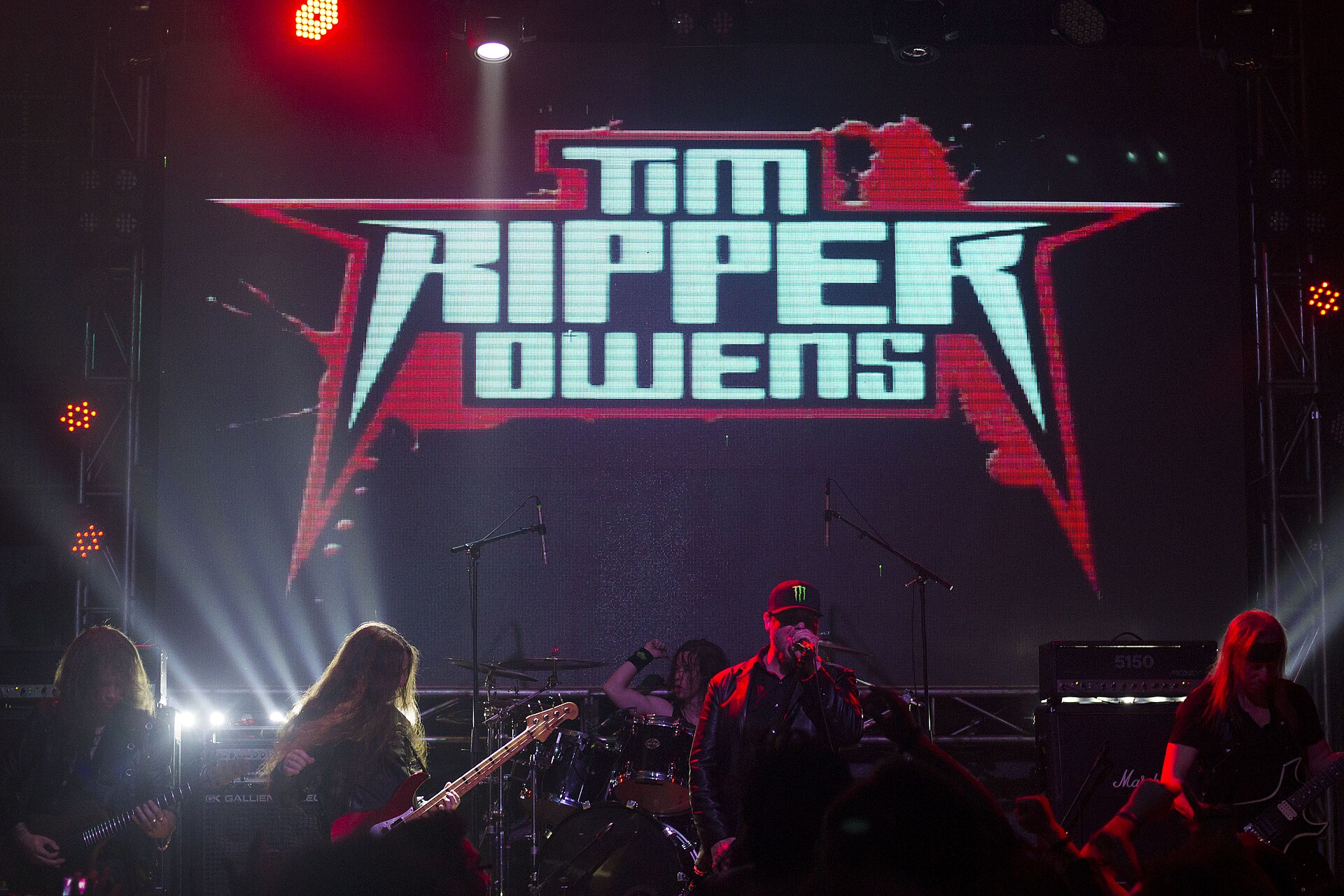
Tim "Ripper" Owens on stage, 2017 — photo by Mabg1989 (CC BY-SA 4.0, via Wikimedia Commons)
Tim "Ripper" Owens on Joining Judas Priest at Metal's Worst Moment — and the Era That Got Erased
Judas Priest just played “The Ripper” live for the first time since 2019, in the same month the singer it nicknamed gave one of his most honest interviews about the job. The quote is twelve words. The web behind it runs from 1996 to right now.
The song came back the same month he did
On July 25, Judas Priest opened their Faithkeepers European tour at BOBfest in Germany and dropped “The Ripper” into the set, the first time the song had been played live since 2019, per Blabbermouth’s report on the opener and Ultimate Classic Rock’s setlist rundown.
Three weeks before that, Tim “Ripper” Owens, the man who took his stage name from that exact song, sat down with Chile’s Radio Futuro and summed up his entire tenure in one line:
“I couldn’t have joined Judas Priest at a worse time [for] heavy metal.”
Nobody planned that collision. The band resurrects the song that named him, he publishes the clearest reading of his own era, same month. There’s nothing mystical in it; the catalog and the man just orbited back into the same frame. But it makes this the right week to map what that quote actually connects to.
1996: the best job in metal, at the worst address
The story of how Owens got the gig is so improbable that Hollywood borrowed it: he was fronting a Judas Priest tribute band called British Steel in Ohio when the actual band hired him in February 1996, and kept him quiet about it until the public announcement that May (Rolling Stone). The film Rock Star (2001) is loosely inspired by that arc: cover-band singer gets the call from the band on the posters.
His quote nails the catch: the fairy tale had terrible timing. By Owens’s own framing in the Radio Futuro interview, the mid-90s were the bottom of the market for classic heavy metal. The big tours, the radio presence, the cultural weight had all drained somewhere else. He walked into one of the most famous jobs in the genre at the exact moment the genre couldn’t pay the fame off.
And still, the records his era produced were deliberate about one thing. On Jugulator (1997), the first of his two studio albums with the band (Demolition, 2001, being the second), Owens told Radio Futuro:
“The record was important because we still made a heavy metal record.”
In 1997 that was a choice. Plenty of veteran bands spent the late 90s sanding their sound down toward whatever was charting. The Owens-era Judas Priest went heavier instead. You can argue with the songs; you can’t argue with the position.
The replacement who agreed with the ending
The arc closed in mid-2003 when Rob Halford came back, leading to Angel of Retribution (2005). Owens moved on to Iced Earth. The part of the interview that deserves more attention than the headline quote came when he was asked about metal’s comeback. The man who lost the job said this:
“You know what? Judas Priest needed Rob back.”
The interim singer, the guy whose era ended so the reunion could happen, endorsing the reunion, because by 2003 the big tours were returning and the band’s second act needed its original voice to land. Owens is reading the market the same way the band did, and that is rarer in rock interviews than any grievance would have been.
The era you can’t stream
The grievance does exist, though, and it’s structural. In an interview with Rolling Stone earlier this year, Owens described how the band has effectively erased his era: Jugulator and Demolition are the only part of the Judas Priest catalog missing from streaming, surfacing only inside a $500 box set.
So the situation, as of this summer: the nickname is celebrated onstage, with “The Ripper” back in the set, while the albums the actual Ripper sang on are the one stretch of the discography you cannot press play on. The name got re-canonized and the work didn’t.
All of this against a very busy Judas Priest 2026: The Best of Judas Priest compilation out June 19 on Sony, the documentary The Ballad of Judas Priest (from Tom Morello and Sam Dunn) headed for wide release this year, and the band planning to record a new album in 2026. The legacy machine is running at full speed, with a seven-year hole in the middle of it.
Where the Ripper era actually lives now
The Owens era didn’t disappear so much as relocate, and that’s the part that belongs on a Real Rock Lab map. K.K. Downing, founding Judas Priest guitarist and also outside the current lineup, now leads KK’s Priest, with Owens on vocals. Two albums so far: Sermons of the Sinner (2021) and The Sinner Rides Again (2023). And this September and October they’re taking a roughly 45-show North American tour out with W.A.S.P., where Downing says they’ll play Judas Priest classics never performed live before.
So look at the map for the rest of 2026. Two bands built from Judas Priest DNA are on the road at the same time. One carries the name and the reunion-era lineup, and just revived “The Ripper,” the song, after seven years. The other carries a founding guitarist and the actual Ripper, digging up deep catalog the mothership never touched. The band erased his era from streaming; the era grew legs and booked its own tour.
That’s the node this quote sits on. “I couldn’t have joined at a worse time” reads less like a complaint than like the first line of a story where the worst-timed singer in metal ends up co-owning the genre’s weirdest split inheritance.
Pull this thread
Owens is the most famous case, but every legacy metal band that crossed the 90s has an interim era; Iron Maiden had the Blaze Bayley years over the same stretch. Some of those eras got quietly re-canonized, some got the Jugulator treatment. Which 90s “wrong singer” era actually deserves the box-set rescue? Bring your pick to @realrocklab on X or Threads, and we’ll map the interim-singer web next.
Sources: Radio Futuro’s interview with Tim “Ripper” Owens (July 2026); Rolling Stone; Blabbermouth; Ultimate Classic Rock; Sonic Perspectives; Metal Injection.
In this web: Judas Priest · Kks Priest · Tim Ripper Owens · Rob Halford · K K Downing