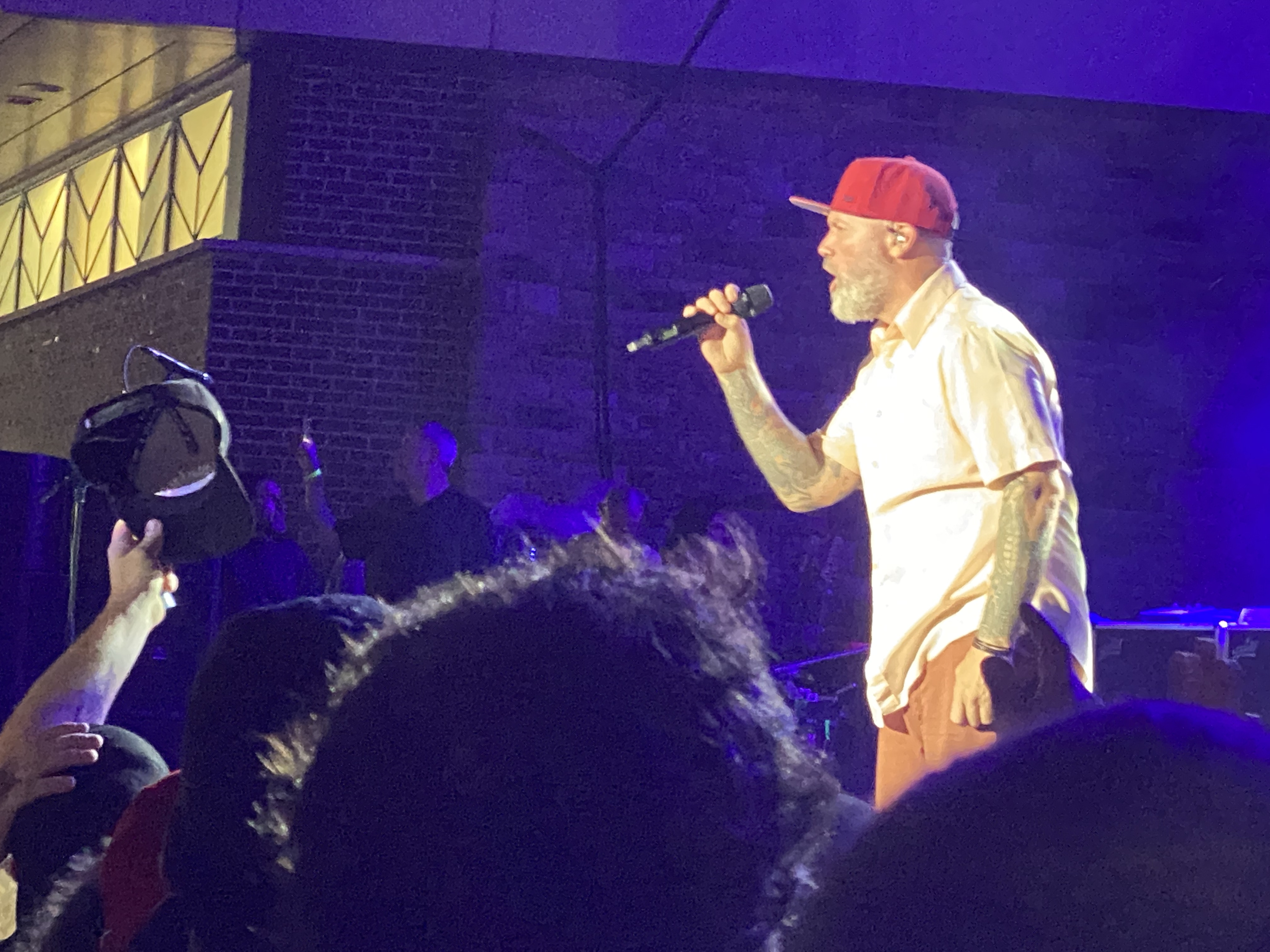
Foto: ECarterSterling — CC BY-SA 2.0, via Wikimedia Commons
The Chicago radio DJ who got Limp Bizkit run off a Metallica stage, and the 2027 stadium run that makes the comeback official
In 2003 a local morning host spent a week telling his listeners to bring things to throw at Fred Durst. They did. Metallica brought the band back as an M72 opener in 2025, and has now booked them for twelve stadiums in 2027.
On 16 September 2026, Metallica announced twelve North American stadium dates for spring 2027, with Limp Bizkit and Avatar opening. The run goes from Vancouver’s BC Place on 8 May to Rice-Eccles Stadium in Salt Lake City on 19 June, with the band playing in the round at the 50 yard line. Limp Bizkit already opened a handful of M72 stadium dates in 2025. The last full tour they shared, in 2003, ended with Durst pelted off a stage outside Chicago by a crowd a radio host had spent a week building.
Twenty-four years sit between 2003 and that stadium run, and the turn happened on a handful of scattered dates in 2025. Most outlets will tell that as nostalgia. The question underneath it is who had the power to decide it, and how that power moved.
What actually happened at Hawthorne Race Course
The geography is wrong in most retellings. The show was not in Chicago. It was on 26 July 2003 at Hawthorne Race Course, a horse track in Stickney, in the suburbs, and the bill was Summer Sanitarium: Metallica headlining, with Limp Bizkit, Linkin Park, Deftones and Mudvayne underneath.
Durst walked out to bottles, coins and garbage from the first minute. There were “Fred Sucks” banners in the crowd. Every time an earlier band said the words “Limp Bizkit” from the stage, the boos came back. He answered with bravado, then with slurs, then walked off somewhere between twenty and thirty minutes into the set. Blabbermouth’s headline that week said the band quit playing after twenty minutes; other reports put it at half an hour. He kept shouting from the wings until someone took the microphone off him. The crowd then waited more than an hour for Metallica. (Billboard, Blabbermouth, NME)
One thing the retellings usually add, and shouldn’t: that Limp Bizkit walked off the tour after that night. There is no evidence for it. Summer Sanitarium ran twenty-one shows; setlist.fm has nineteen Limp Bizkit setlists filed under that tour, and there is a Minneapolis date the following day. What’s documented is that Durst left the stage mid-set in Stickney. The rest grew in the telling.
The part nobody puts in the recap
That crowd did not assemble its own hatred on the drive over. For the week leading up to the show, the Chicago radio host Mancow, whose legal name is Matthew Erich Muller, had been going after Durst on air, and by the accounts from that July he encouraged listeners to bring things to throw. (Metal Injection) The coins were not spontaneous. Somebody put them in pockets on the way out the door because a guy on the morning show said to.
Real Rock Lab is a rock radio lab, and the most famous crowd revolt of the nu metal era started as a piece of radio programming. One local host with a transmitter could organise an audience of tens of thousands into a single act, and the act was ending a set early on a five-band stadium bill. That is what gatekeeping looked like in 2003: local, loud, and able to reach onto a stage it had no ticket for.
Why 2003 and not any other year
The timing is almost too neat. Metallica were touring St. Anger, the record that split their own audience down the middle. Limp Bizkit were weeks from Results May Vary, the album where the commercial floor gave way. The 2003 edition of Summer Sanitarium grossed 48.8 million dollars across twenty-one shows (Billboard Boxscore figures, compiled on Wikipedia); the 2000 edition, with Korn, Kid Rock, Powerman 5000, System of a Down and Karma to Burn, did 42 million across twenty.
So the money was still enormous. The consensus underneath it was gone. Stickney is the moment you can point to where a paying nu metal crowd turned on the genre’s biggest frontman in public, at scale, and the other four bands on the bill kept working.
Look at those four names now and the era reads clearly: Linkin Park and Deftones both outlived the category they got filed under, Mudvayne went quiet for a decade and came back to the festival circuit, and Limp Bizkit spent the longest stretch in the wilderness of any of them.
What changed between the two dates
In 2003 the gatekeeper was a radio station, and it could run a band off a stage.
In 2027 the gatekeeper is the headliner’s opening slot. Metallica pick who plays in front of them in twelve stadiums, and nobody with a microphone in Stickney or anywhere else has a vote. The M72 cycle has handed that slot to Pantera, Ice Nine Kills and Avatar, among a long list, and the band that got run off in 2003 is the one Metallica brought back for a handful of dates in 2025 and promoted to a full stadium run in 2027.
Rehabilitation used to require radio’s permission. Now it requires one band’s booking decision, and Metallica made theirs twice.
The practical details, since you’ll want them
The stadium run follows Metallica’s Sphere residency in Las Vegas, “Life Burns Faster”: twenty-four shows running from 1 October 2026 to 13 March 2027. (Billboard) The stadiums start about eight weeks after that ends.
The twelve dates: 8 May Vancouver (BC Place), 13 May San Diego (Snapdragon), 18 May El Paso (Sun Bowl), 22 May San Antonio (Alamodome), 26 May Fayetteville (Razorback), 29 May Kansas City (Arrowhead), 2 June Raleigh (Carter-Finley), 5 June Indianapolis (Lucas Oil), 8 June Buffalo (Highmark), 12 June Madison (Camp Randall), 15 June Cleveland (Huntington Bank Field), 19 June Salt Lake City (Rice-Eccles). Fan club presale was 21 September 2026, general sale 25 September. (Loudwire, Blabbermouth, metallica.com)
The thread to pull next
There is a recording of the Stickney set on YouTube, filmed from the crowd. It is the closest thing to a primary document of the afternoon, and it exists because somebody in that field decided the moment was worth keeping.
The question it leaves open is about the other four names on that 2003 poster. Linkin Park, Deftones and Mudvayne all came out of that summer intact; Limp Bizkit came out of it as a punchline and needed two decades and a headliner’s invitation to get back. The bill was the same, the year was the same, the audience was the same. What made one band the target?
Tell us which of those four you would put on a stadium bill in 2027, and why: @realrocklab on Threads.
In this web: Metallica · Limp Bizkit · Avatar · Linkin Park · Deftones · Mudvayne · Korn · System of a Down