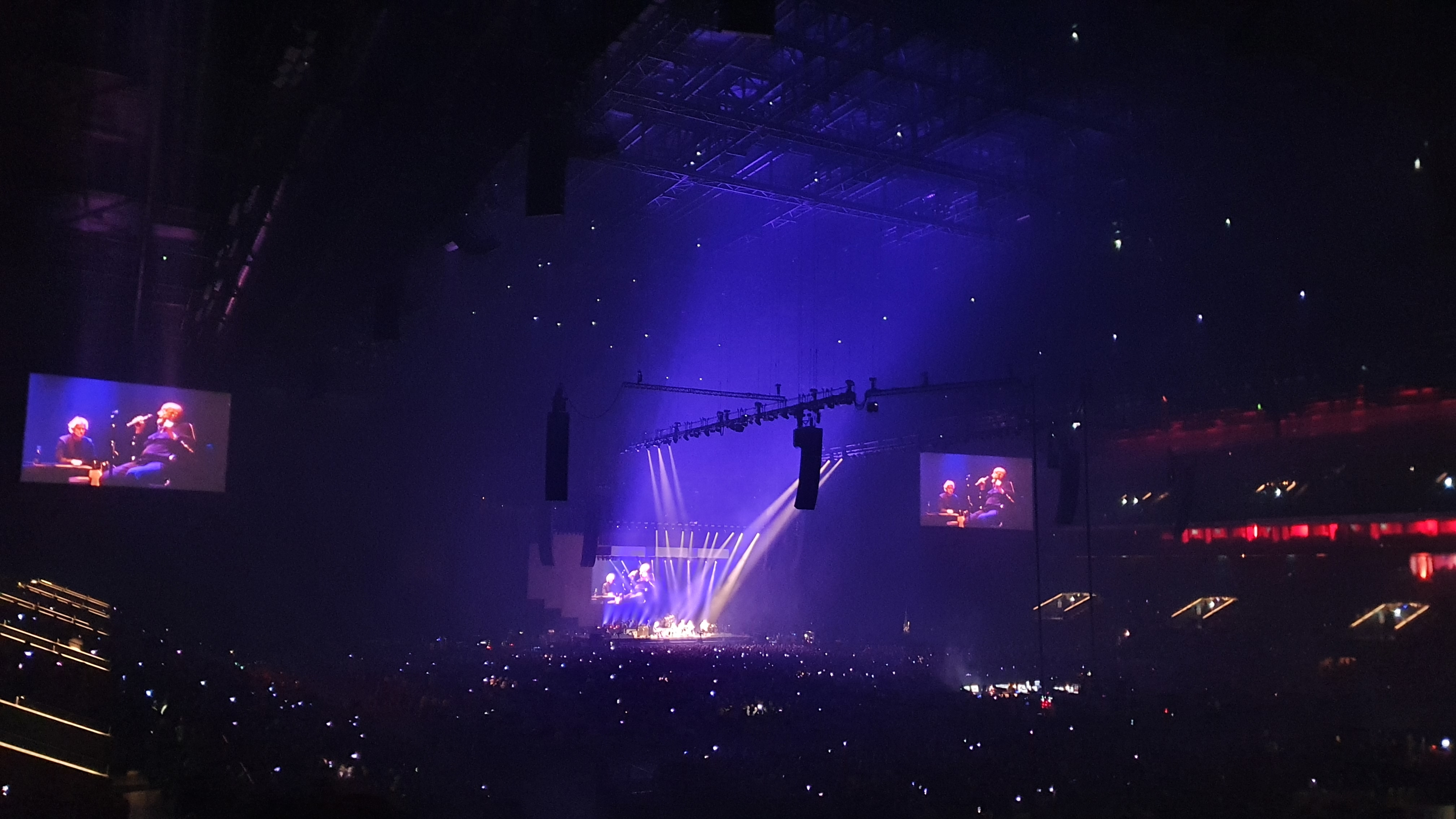
Foto: Kilyann Le Hen — CC BY-SA 4.0, via Wikimedia Commons
The Bassist Queen Had Before John Deacon: Barry Mitchell and the Nine Months Nobody Talks About
Between June 1970 and March 1971, Queen went through three bass players. Barry Mitchell lasted the longest — around thirteen gigs — and left because he didn’t think the band was going anywhere. He died on 17 August 2026, and the strange part is that he was right.
The lineup that looks inevitable wasn’t
Pull up the back cover of any Queen compilation and you get four faces that seem welded together: Freddie Mercury, Brian May, Roger Taylor, John Deacon. Twenty years, no substitutions, no drama in the rhythm section. It reads like a band that was assembled correctly on the first try.
It wasn’t. Before Deacon walked in, Queen auditioned and burned through three bass players in nine months, and every one of them left — or was let go — for reasons that made complete sense at the time.
The longest-serving of the three was Barry Mitchell. He played roughly thirteen shows between August 1970 and January 1971. He quit. And he spent the rest of his life being cheerfully, unusually honest about why.
Before the bass chair started spinning
The prehistory is Smile — Brian May’s band with Tim Staffell on bass and vocals, Roger Taylor on drums after answering an ad asking for a drummer in the Mitch Mitchell / Ginger Baker mould. Freddie Bulsara, an Ealing Art College student, was a fan of Smile before he was anything else.
Staffell left in 1970, entirely amicably by his own account: he wanted something looser and more improvisational, he was heading toward jazz and blues, and he didn’t think the band had a future. He joined Humpy Bong with ex-Bee Gees drummer Colin Petersen (Ultimate Classic Rock interview with Staffell).
Freddie took the microphone, proposed the new name, and picked up a surname to go with it. Then the revolving door opened.
Three bassists, nine months
Mike Grose came first — a childhood friend of Roger Taylor’s from Truro, part-owner of PJ’s, the pub where Smile had played. He lasted three gigs, including the first show the band ever played under the name Queen: 27 June 1970, City Hall in Truro, a Red Cross benefit arranged by Roger Taylor’s mother, £50, and the poster still said Smile (queenlive.ca). Grose’s own verdict on that night was blunt: “we were rough.” He died in 2019 (Wikipedia).
Barry Mitchell auditioned on 13 August 1970 in an Imperial College classroom — Smile numbers and Hendrix covers. He debuted ten days later at the Imperial College Union Hall, the first proper London show with Freddie fronting, and the setlist already had “Stone Cold Crazy,” “Son and Daughter” and “Doin’ Alright” sitting next to “Jailhouse Rock” (queenlive.ca). “We rehearsed quite fervently for the gig,” Mitchell recalled, “and the band was very nervous playing for friends.”
Doug Bogie was a teenage telephone-engineering trainee who played exactly two shows in February 1971 — one to fewer than ten people at Hornsey Town Hall, where Queen weren’t even on the poster, and one opening for Yes at Kingston Polytechnic (queenlive.ca). Nobody fired him. In the back of the borrowed van after the Yes gig, Freddie announced he didn’t want to continue; Bogie, the new guy, took that as the band breaking up. The band then carried on without him.
Deacon joined at the end of February 1971 and played his first show with the classic four on 2 July (Ultimate Classic Rock).
The Cavern, the shoes, and the popcorn
The Mitchell months are where all the good texture lives, and almost all of it survives because he kept telling the stories.
November 1970: Queen played the Cavern Club in Liverpool, two nights, arranged by Ken Testi (queenlive.ca). It was raining. Brian May put his soaked shoes on an electric heater to dry before the set, and they caught fire during the show. Mitchell’s theory — and it’s his, not mine — is that this is why May moved to clogs.
On the drive up, May had a new camera and spent the trip filming his bandmates crammed into the back of the transit. Catering for the debut rehearsals was popcorn made in May’s flat.
Mitchell’s last night was 9 January 1971 at Ewell Technical College, a late addition to a bill headlined by Genesis, playing on a side stage for lack of space or lack of interest (queenlive.ca).
Why he left, in his own words
Mitchell used to joke that he was “fired because they thought I was useless,” then give the real answer, which was better. I didn’t see the potential."*
He wanted the debut album to go somewhere with brass. He thought the band lacked direction. And he said the thing almost nobody says out loud about 1970 Freddie: “Freddie at the time didn’t have great command of his voice” — adding, in the same breath, that later “he developed his voice, he got his technique right” (queenlive.ca).
He wasn’t wrong about any of it. Everything he described was true of the band he was standing in.
Here’s the corroborating witness. In October 1970, at the College of Estate Management in Kensington, a nineteen-year-old electronics student watched Queen play — with Mitchell on bass — and came away flat: “They were all dressed in black, and the lights were very dim too, so all I could see were four shadowy figures. They didn’t make a lasting impression on me at the time.” That was John Deacon (Ultimate Classic Rock). The man who would spend twenty years in the job saw the same thing Mitchell saw.
The part that makes this a connection, not an obituary
Queen’s self-titled debut came out in 1973, two years after Mitchell had gone. Two of its songs — “Liar” and “Son and Daughter” — carry bass lines Mitchell originated in the live set, which Deacon later developed into his own versions on stage (Ultimate Classic Rock).
Sit with that for a second. The Queen he didn’t want to play in has his fingerprints on its first record.
That’s the shape of the whole story, and it’s why this is a Web piece and not a farewell notice. Everyone who walked away judged accurately. Staffell wanted to improvise; the band wasn’t improvisational. Grose couldn’t live on the economics of rehearsing between gigs; there were no economics. Mitchell heard a singer who hadn’t found his instrument yet and a band with no direction, and both observations were correct in 1970. They weren’t fools. They correctly assessed a band that did not yet exist.
Two bands ahead of the curve, no payoff from either. He stopped playing, came back in the 1990s with Jayne Raydio, and got on with a life.
And then there’s the wall at the Cavern, where the names of everyone who played there are painted up. Queen’s is on it, near Pete Best’s. The Beatle who left, next to the band whose first three bassists all left.
The archivist nobody appointed
Mitchell died on 17 August 2026. The news reached the public three or four days later through Greg Brooks, Queen’s official archivist, posting on Facebook: “Terribly sad news just received that early Queen bass player, Barry Mitchell, has passed away. His anecdotes at the convention were fascinating and offered rare insight.”
Note where that quote is set. At the convention. Mitchell spent decades at Queen fan conventions telling these stories — the shoes, the popcorn, the transit van, the honest assessment of a young Freddie’s voice — for free, without bitterness, without pretending he’d been robbed. Almost every detail in this piece traces back to him talking.
The man who couldn’t see the potential became the keeper of the record for the period nobody else documented. That’s not irony. That’s a guy who found the right job on the second try.
Several outlets printed his age; they printed three different numbers, and none of them cited a family statement or a document, so this piece won’t guess. He is survived by his family, and a cause of death has not been made public.
The thread to pull next
The 39th International Queen Fan Club Convention runs 2–5 October at Golden Sands, Mablethorpe. It will be the first one without him — and the anecdotes Brooks called “rare insight” are now, formally, archive.
Which leaves a question worth chasing. Doug Bogie is alive, and in February 2026 he sat down for a podcast and a video interview and talked about the audition, the two shows, and the studio-engineering career that followed (dopeYEAH talk, Spotify). Tim Staffell is alive and has been telling his side for years. Two of the four men who held that bass chair before Deacon are still here, still talking, and the version of Queen they describe — broke, unfocused, playing side stages to nine people — is completely absent from the official story.
The near-miss lineup is a well-documented band. It’s just documented by the people who left it.
If you’ve got a favourite pre-fame lineup story — the member who walked before the payday, the session player whose part survived them — come tell us: @realrocklab on X and Threads.
Sources: queenlive.ca gig archive · Ultimate Classic Rock — Barry Mitchell dies · Ultimate Classic Rock — The Day John Deacon Joined Queen · Ultimate Classic Rock — Tim Staffell interview · NME · RTBF · No Treble · People / Yahoo · Brian May — Queen Before Queen, Part 4 · Wikipedia — Mike Grose · dopeYEAH talk with Doug Bogie
In this web: Queen · Smile · Genesis · Brian May · Roger Taylor · John Deacon