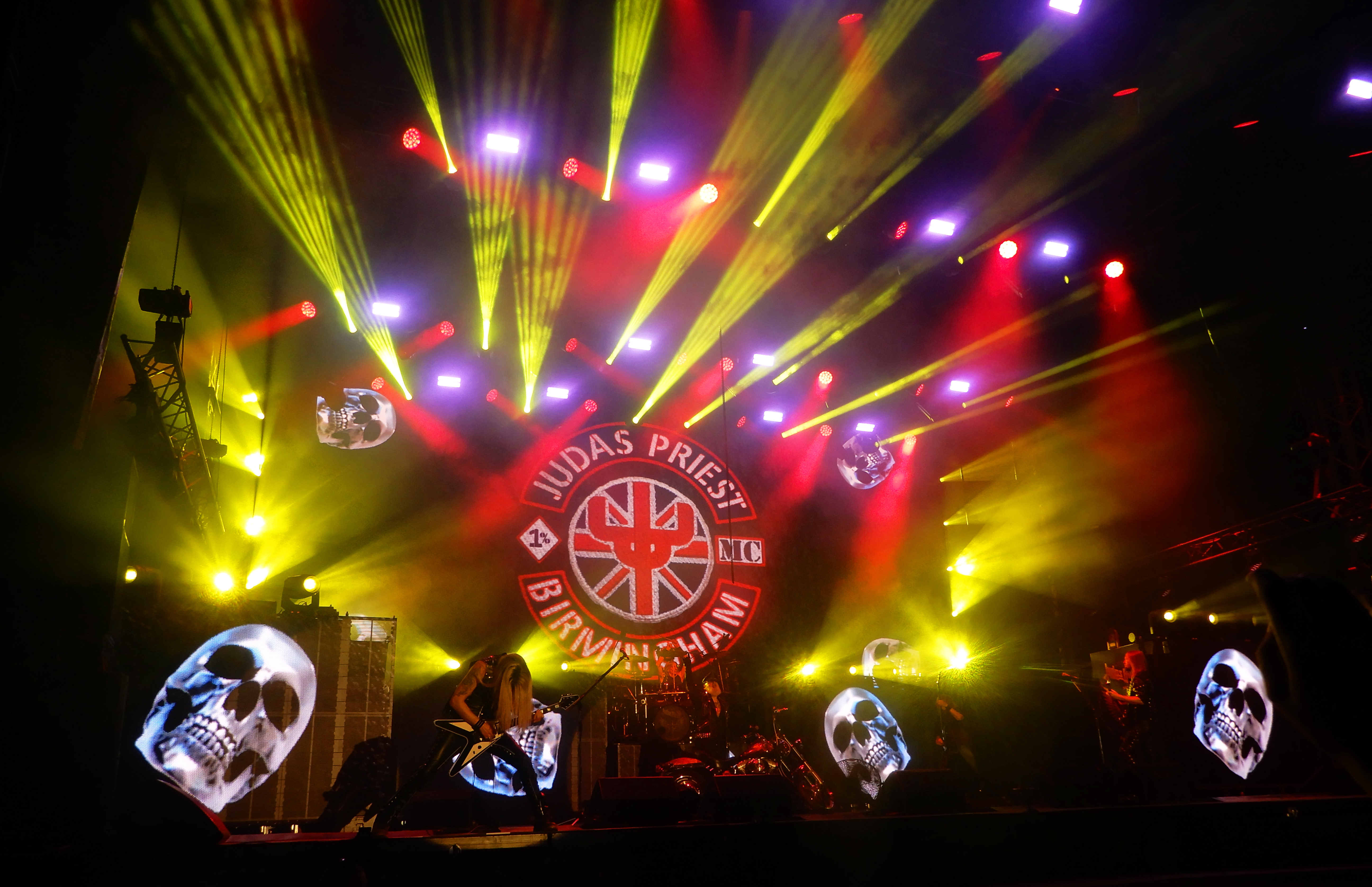
Foto: Antoine TILLY — CC BY-SA 4.0, via Wikimedia Commons
Judas Priest's Faithkeepers Setlist: Why "The Ripper" Came Back and the Ripper Years Stayed Out
Two 1970s songs returned to the Judas Priest set this summer after seven years away. The word on both sides of the story is “Ripper”, and it points in opposite directions.
Mönchengladbach, 25 July 2026
Judas Priest opened the Faithkeepers tour on 25 July 2026 at SparkassenPark in Mönchengladbach, Germany. First show of the year, 17 songs, and most of it is the 1980s catalogue you would expect: British Steel, Screaming for Vengeance, Defenders of the Faith, Turbo. “You’ve Got Another Thing Comin’” opened. “Living After Midnight” closed. Nobody bought a ticket to be surprised by that.
The surprises came fourth and tenth. “The Ripper”, from Sad Wings of Destiny (1976), and “Delivering the Goods”, from Killing Machine (1978), were both back for the first time since 2019, according to Ultimate Classic Rock’s set list report. Seven years is a long gap for a band that tours almost without pause. Add “Steeler” in the ninth slot, a third rarity, though it comes from British Steel (1980) and so gets its own mention rather than the “1970s deep cut” label. The European leg runs 27 dates and ends in London on 21 September.
Setlist watchers were arguing about it within the hour. This piece is about the argument underneath the argument: why a band puts its own songs in a drawer, and what it takes to open the drawer again.
A setlist is a self-portrait
Every band with a long catalogue plays a fraction of it. The set is what the band says about itself tonight, and the omissions say as much as the picks. A song tied to a member who is gone. A lyric the singer outgrew. A song that flopped and still stings. A song the voice can’t carry the way it did at 26. Each of these is a reason to leave something out, and each has a different expiry date.
That is the Crate Digs question. Which exiles are temporary and which are permanent? Judas Priest, as it happens, is carrying both kinds on this tour, and the same word sits on each.
“The Ripper” came back because the record turned 50
The tour coverage left out one connection. 2026 is the fiftieth anniversary of Sad Wings of Destiny, the record that turned Judas Priest into Judas Priest after the debut Rocka Rolla. And the band has a product for it. Blabbermouth reported an archival edition: a high-resolution transfer from the original 1976 master tapes, done at British Grove Studios in London, supervised by Tom Allom and Luie Stylianou, mastered by Matt Colton at Metropolis. The running order is restored to what the band originally intended, opening with “Prelude”. And the CD is sold in one place only: the merch stands on the Faithkeepers tour.
Two of the 17 songs are from Sad Wings of Destiny: “The Ripper” and “Victim of Changes”. One of them never left. The other had been away since 2019 and came back the summer a fiftieth-anniversary CD of its album went on sale in the same building.
This is my reading. Nobody in Judas Priest has said on the record that “The Ripper” is back because Sad Wings is 50. But the two facts sit next to each other on the same night, and I don’t believe a band that just spent time at British Grove restoring the tapes forgot which record it wanted you to hear. Halford called it “an important album for us as a band and for heavy metal music in general” back in 2015, a line the band chose to reprint in the anniversary announcement.
Which gives us the first kind of exile. A song goes on the shelf because the set has only so many minutes and the 80s hits pay the rent. The song did nothing wrong. Something else wanted the slot. That kind of exile ends when there is a reason to bring the song back, and a fiftieth-anniversary CD at the merch table is a reason.
“Ripper” Owens stays out, and no anniversary fixes that
Now the other Ripper. Tim “Ripper” Owens sang for Judas Priest from 1996 to 2003. The nickname and the 1976 song share a word, and that is where the similarity ends. Owens made two studio albums with the band, Jugulator (1997) and Demolition (2001). Since Rob Halford came back, the band has not played a single song from either record on any tour, in more than twenty years.
And unlike the 70s absences, this one has been explained in public. Drummer Scott Travis, talking to Blabbermouth in April 2025: “I just think it’s not something Rob really wants to do, and I totally understand that.”
Halford went further. Asked by Classic Rock whether he had ever listened to Demolition and Jugulator (quoted via Blabbermouth), he said: “No. I still haven’t. This might sound selfish, but because it’s not me singing, I’m not attracted to it.”
Jugulator turns 30 in 2027, and nobody expects a merch-stand reissue or a song from it in the fourth slot. The current singer says those records are somebody else’s voice, and a setlist is a self-portrait: you do not hang someone else’s face in the middle of it.
That is the second kind of exile, and it has no expiry date. A round number reopens the first kind. Nothing reopens the second, short of the band deciding it is a different band.
Two Rippers, one band, opposite forces
The anatomy the setlist argument keeps circling is visible inside one group on one tour:
- Exile by competition for the slot. The song was fine; the set was full. It ends when something gives the song a reason to be there. “The Ripper”, 2026.
- Exile by identity. The song belongs to a version of the band the current band does not recognise as itself. It does not end. Jugulator and Demolition, every tour since Halford returned.
The first is a scheduling problem dressed up as a mystery. The second is the band telling you who it thinks it is. When you watch a group leave a song out year after year, the useful question is which of these two you are looking at. If a reissue would bring it back, it is the first. If the singer would have to stand behind a lyric someone else sang, it is the second.
The merch stand is the tell
Blabbermouth’s report says the CD is exclusive to the Faithkeepers stands. You cannot stream the restored running order and you cannot order it. You have to be in the room. That is a band folding the album into the show itself, and playing two songs from it is the same decision made from the stage side.
I’d keep an eye on the next studio record too. Judas Priest is recording its twentieth album during 2026 with no date announced, per Ultimate Classic Rock. The last one was Invincible Shield in 2024, and “Panic Attack” from it is in this set. Whatever the twentieth record turns out to be, it will push something else off the list. That is how the drawer fills up in the first place.
The thread to pull
Every band with 40 years on the road has exiles, and after this tour I’m convinced they sort into those two piles: songs waiting for a round number, and songs that would require the band to be someone else.
Pick a band you follow and give me one song from each pile. Which record is the one they’d restore from the tapes and sell at the stand, and which is the one the singer says isn’t his voice? Bring the year and the song to @realrocklab on X or Threads. I have a list started, and Judas Priest is only the first entry.
In this web: Judas Priest · Tim Ripper Owens · Rob Halford