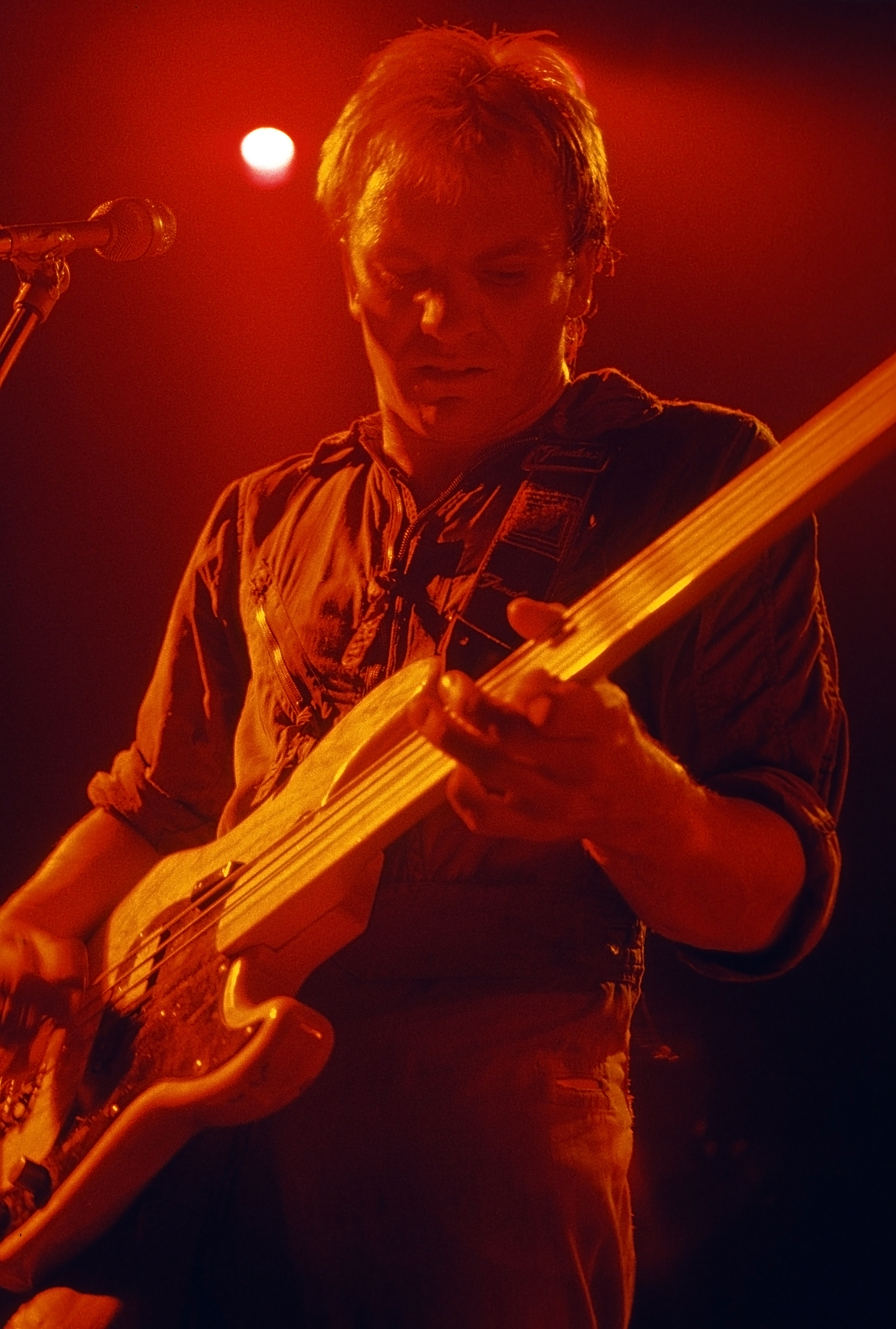
Acroterion — Wikimedia Commons, CC BY-SA 4.0
Ghost in the Shell's Real Rock Connection Isn't Metallica — It's The Police (and U2)
A stubborn fan myth says “Master of Puppets” was inspired by Ghost in the Shell. The timeline kills that in one move, and the real rock connections buried in this franchise are better than the myth ever was.
The claim, as it circulates, is that Metallica wrote “Master of Puppets” about the Puppet Master, the body-hopping villain of Ghost in the Shell. Puppets, puppet master, control, loss of self: the vocabulary lines up so neatly you can see why people want it to be true.
It isn’t. And the fun part is that once you throw the myth out, the franchise’s actual rock connections turn out to run through a 1967 philosophy book, a Police album, and a U2 side project.
The timeline kills it in one move
Master of Puppets came out on March 3, 1986. It turned forty this year, an anniversary Clash marked with the fair summary that it redefined heavy metal.
Masamune Shirow’s Ghost in the Shell manga started in 1989. Mamoru Oshii’s anime landed in November 1995.
So for Metallica to have been inspired by Ghost in the Shell, the band would have needed to hear about a manga three years before its author drew it. That’s the whole debunk: the arrow of time does the work before anyone needs to read the lyrics.
Where did the myth come from, then? The likeliest vector is the AMV era: fan-made anime music videos cutting the 1995 film’s Puppet Master storyline to the song, welding the two together in a generation’s memory. That origin story is plausible and widely repeated in fan spaces, but I couldn’t find a citable first instance, so I’m treating its origin as diffuse: nobody can point to where it started.
What the song is actually about
No mystery here: James Hetfield explained it while the record was still new. “Master of Puppets” is about addiction, and specifically about the moment the relationship inverts. As he told Thrasher in 1988: “It deals pretty much with drugs. Instead of you controlling what you’re taking and doing, it’s drugs controlling you” (Songfacts).
Even the most quoted line has a street address. “Chop your breakfast on a mirror” came from watching Rich Burch, a real friend and a fixture at the band’s El Cerrito house, start his mornings with a line of coke (Louder). The master in the song was the substance on the table, not a cyborg villain.
The real connection: one 1967 book named the manga and a Police album
Shirow chose the title “Ghost in the Shell” as a deliberate homage to The Ghost in the Machine, Arthur Koestler’s 1967 book about the mind-body problem. Koestler himself was riffing on philosopher Gilbert Ryle, who coined “the ghost in the machine” as a jab at Descartes. Shirow’s Japanese publisher insisted on a punchier local title, Kōkaku Kidōtai, but he held out for keeping the English phrase on the cover (TV Tropes), which is why the franchise carries the name it does.
Where else have you seen that book title?
The Police released Ghost in the Machine in 1981. Same book, same homage. Sting was a committed Koestler reader, and “Spirits in the Material World,” the album’s opener, is basically Koestler’s thesis set to a synth-reggae bounce (Ultimate Classic Rock).
He didn’t stop there. Synchronicity (1983), the biggest Police album and the one with “Every Breath You Take,” took its title from another Koestler book, The Roots of Coincidence, which is where Sting got his Jung (Sting.com).
So the map looks like this: one Hungarian-British philosopher-journalist, writing in 1967, ends up naming both the defining cyberpunk franchise of the 90s and the last two Police albums. Shirow and Sting never collaborated, probably never crossed paths, but they were reading the same shelf, eight years apart, on opposite sides of the planet. That’s a real connection; the Metallica one is a coincidence of vocabulary.
The other real connection: U2 and Brian Eno are literally in the movie
There’s a second thread, and this one is right there in the credits, if you watched the right version.
In 1995, U2 and Brian Eno released an experimental album under the name Passengers: Original Soundtracks 1, a collection of pieces written for films both real and imaginary. One of the real ones was Ghost in the Shell. The track “One Minute Warning” plays over the end credits of the 1995 anime, in the international version. The Japanese cut ends with Kenji Kawai’s “Reincarnation” instead (IMDb, u2songs).
So the myth had the right instinct and the wrong band. Rock royalty is attached to Ghost in the Shell: Bono and Eno, seven minutes of paranoid ambient churn, sitting at the end of the film while most Western viewers were reaching for the remote.
Why this map matters right now
Two anniversaries collided in 2026. Master of Puppets turned forty in March. And the Ghost in the Shell franchise came back the same year with a new TV series from Science SARU. The studio’s take hews close to Shirow’s original manga, and it streamed worldwide on Prime Video (Anime Corner).
The new series also continues the franchise’s habit of choosing its music with intent. The opening theme is by King Gnu; the ending is Millennium Parade with Saya Gray and Daniel Caesar. From Kenji Kawai’s Bulgarian-choir-meets-Shinto chant in 1995, to U2 and Eno over the international credits, to Millennium Parade in 2026, Ghost in the Shell has always treated its credits music as part of the argument. The franchise never needed a borrowed Metallica myth; its actual soundtrack history is stranger and better.
The thread to pull next
Original Soundtracks 1 deserves its own lab session. It’s the album where U2 got weird enough to need a pseudonym: Eno as a full member, tracks written for imaginary films, and one song (“Miss Sarajevo”) that Bono has called a personal favorite of everything he’s done. Why did a band at its commercial peak feel it had to wear a mask to make its most interesting record of the decade? That’s a future episode.
Got a fan myth you’ve always suspected doesn’t survive a timeline check? Bring it to @realrocklab on X or Threads. The lab takes requests.
In this web: Metallica · The Police · U2 · James Hetfield · Sting · Brian Eno