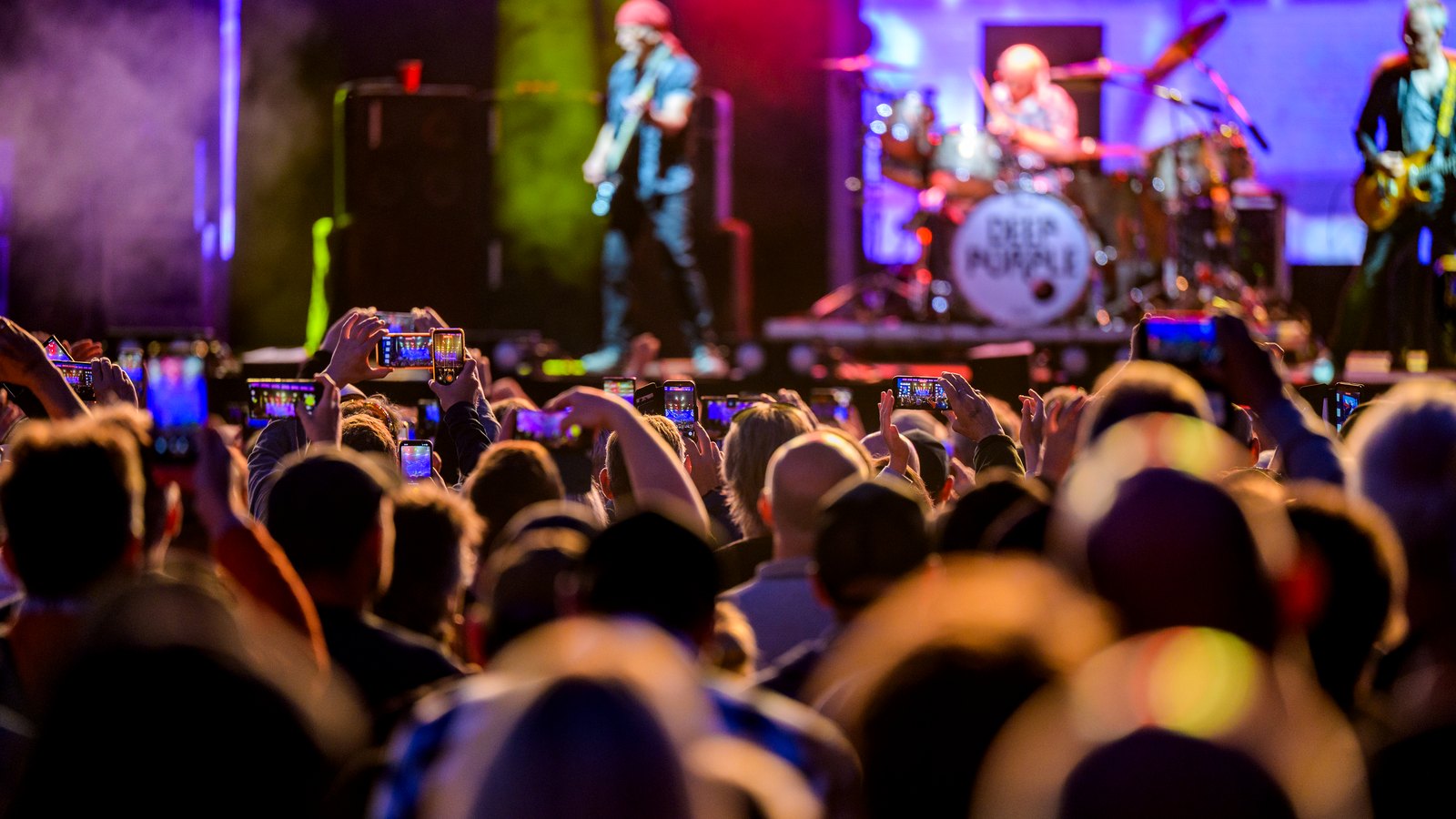
Deep Purple live in Kristiansand, Norway, June 2026 — photo: Birgit Fostervold, CC BY-SA 4.0, via Wikimedia Commons (cropped)
Deep Purple Broke Up in July 1976. Fifty Years Later, Bob Ezrin Just Produced Their 24th Album.
Deep Purple’s management announced the band’s dissolution on July 19, 1976. Almost exactly fifty years later, SPLAT! landed as studio album number twenty-four. The thread connecting those two dates runs through one producer, who spent 1976 in a studio with KISS.
The day the machine stopped
In the summer of 1976, Deep Purple was over, with none of the usual hedging about hiatuses or solo projects. The official announcement came through the band’s management on July 19, 1976, though the machine had seized up months earlier, on a stage in Liverpool.
The band that broke up wasn’t the one on your Machine Head vinyl. This was Mark IV, the fourth lineup, with David Coverdale on vocals, Glenn Hughes on bass, and a 24-year-old American guitar prodigy named Tommy Bolin standing where Ritchie Blackmore used to stand. Blackmore had walked out in 1975 to form Rainbow, and the band’s answer was Come Taste the Band, a record that’s way funkier and better than its reputation, by the way. Go put on “Gettin’ Tighter” and tell me that band had nothing left.
Live, though, it was falling apart. Bolin’s addiction was eating his playing on the bad nights, Hughes had his own demons, and the final show, Liverpool Empire Theatre, March 15, 1976, ended a fifteen-year first act. By December of that same year, Tommy Bolin was dead of an overdose at 25. The story looked finished, like an obituary.
That date, March 15, 1976, comes back.
Meanwhile, in Bob Ezrin’s 1976
While Deep Purple was collapsing, a 27-year-old Canadian producer was building one of the loudest records of the decade. Bob Ezrin, who had already turned Alice Cooper from a band into a theatrical institution on School’s Out and Billion Dollar Babies, and who had made Lou Reed’s Berlin, the most beautifully depressing record of 1973, was in the studio with KISS, making Destroyer.
Destroyer was released on March 15, 1976, the same day Deep Purple played that final Liverpool show. It’s almost too clean: the day one hard rock giant switched off, the record that turned KISS from a live phenomenon into an albums band switched on.
Ezrin rebuilt KISS in the studio. He drilled them like a band camp instructor, brought in an orchestra and a children’s choir, slowed “God of Thunder” down and handed it from Paul Stanley to Gene Simmons, and turned a Peter Criss demo into “Beth,” the ballad nobody wanted that became their biggest US hit single: #7 on the Hot 100, higher than anything else KISS ever charted. That’s the Ezrin signature. He argues with a band until a bigger version of it shows up.
He does exactly the same thing 37 years later, with the band that broke up while he was doing it the first time.
The long way back
The reunion story you probably know: in 1984, the classic Mark II lineup of Ian Gillan, Ritchie Blackmore, Roger Glover, Jon Lord and Ian Paice got back together for Perfect Strangers, and it worked. Then came the long middle period: Blackmore leaves again in 1993 (this time for good, this time for lutes), Steve Morse takes the guitar chair in 1994, Don Airey replaces the irreplaceable Jon Lord on keys in 2002 when Lord retires.
Through all of it, one man never left: Ian Paice. The drummer is the only musician who plays on all twenty-four Deep Purple studio albums. Through every era and every feud, Paice is the load-bearing wall.
By the early 2010s, though, the band was in a strange place. Great live, sure. On record? Rapture of the Deep (2005) came and went. Then Jon Lord died in July 2012, and the question hanging over the band was brutal and simple: why would Deep Purple make another album at all?
Ezrin picks up the thread
The answer was Now What?! in 2013, the first Deep Purple album produced by Bob Ezrin. He gave them the same treatment he gave KISS in 1976: push the band and refuse the autopilot takes. The record opened with grief for Jon Lord and closed sounding like a band that had found a reason to exist in the studio again. It went to number one in Germany, their seventh German #1, and more importantly, it started a run.
Almost nobody predicted what came next: Ezrin never left. Infinite (2017). Whoosh! (2020). The covers detour Turning to Crime (2021). =1 (2024), where Simon McBride, who’d stepped in when Steve Morse left in 2022 to care for his wife, made the guitar chair his own. Deep Purple has now released more studio albums with Bob Ezrin than they made with the classic Mark II lineup in the 1970s.
The producer who spent 1976 building Destroyer while Deep Purple burned down became, half a century on, the reason the band’s late records add up to a catalog instead of a coda.
SPLAT!: fifty years, minus sixteen days
Which brings us to SPLAT!, released July 3, 2026, sixteen days short of a perfect fifty years since the July 19, 1976 breakup announcement. Album twenty-four. Ezrin production number six. The band calls it their heaviest record in years, and the concept underneath it is wilder than the title suggests: the end of humanity, framed as transformation rather than apocalypse, a metamorphosis past physical existence. Which is a very on-brand thing for a band that has itself refused to stop existing in any recognizable form.
Gillan is 80. Paice is still back there, twenty-four for twenty-four. McBride is the youngest guitarist the band has ever had by decades. And the singles, “Arrogant Boy,” “Diablo,” “Guilt Trippin’,” sound like a band with something to prove, produced by a man who has never once let a band coast.
The anniversary story isn’t that a band survived fifty years; plenty of bands survive, and nostalgia is cheap fuel. It’s that the machine that stopped in July 1976 got restarted by the exact person who was too busy to notice it stopping, because he was in a studio making the other defining hard rock record of that year.
The thread to pull next
I keep circling back to Bob Ezrin as maybe the single most connective node in all of hard rock. Alice Cooper, Lou Reed, KISS, Pink Floyd’s The Wall, Peter Gabriel’s first solo record, Deep Purple’s entire second life: that’s one guy’s fingerprints on five different universes that most fans file on completely different shelves.
There’s a darker, sadder thread hanging off this story too. Tommy Bolin only got the Deep Purple gig because David Coverdale played the band Billy Cobham’s jazz-fusion monster Spectrum, an album that also rewired how Jeff Beck thought about instrumental guitar. One fusion record from 1973 bent the paths of two of rock’s greatest guitarists.
That’s a web worth mapping. Next time, we pull it.
In this web: Deep Purple · Kiss · Bob Ezrin