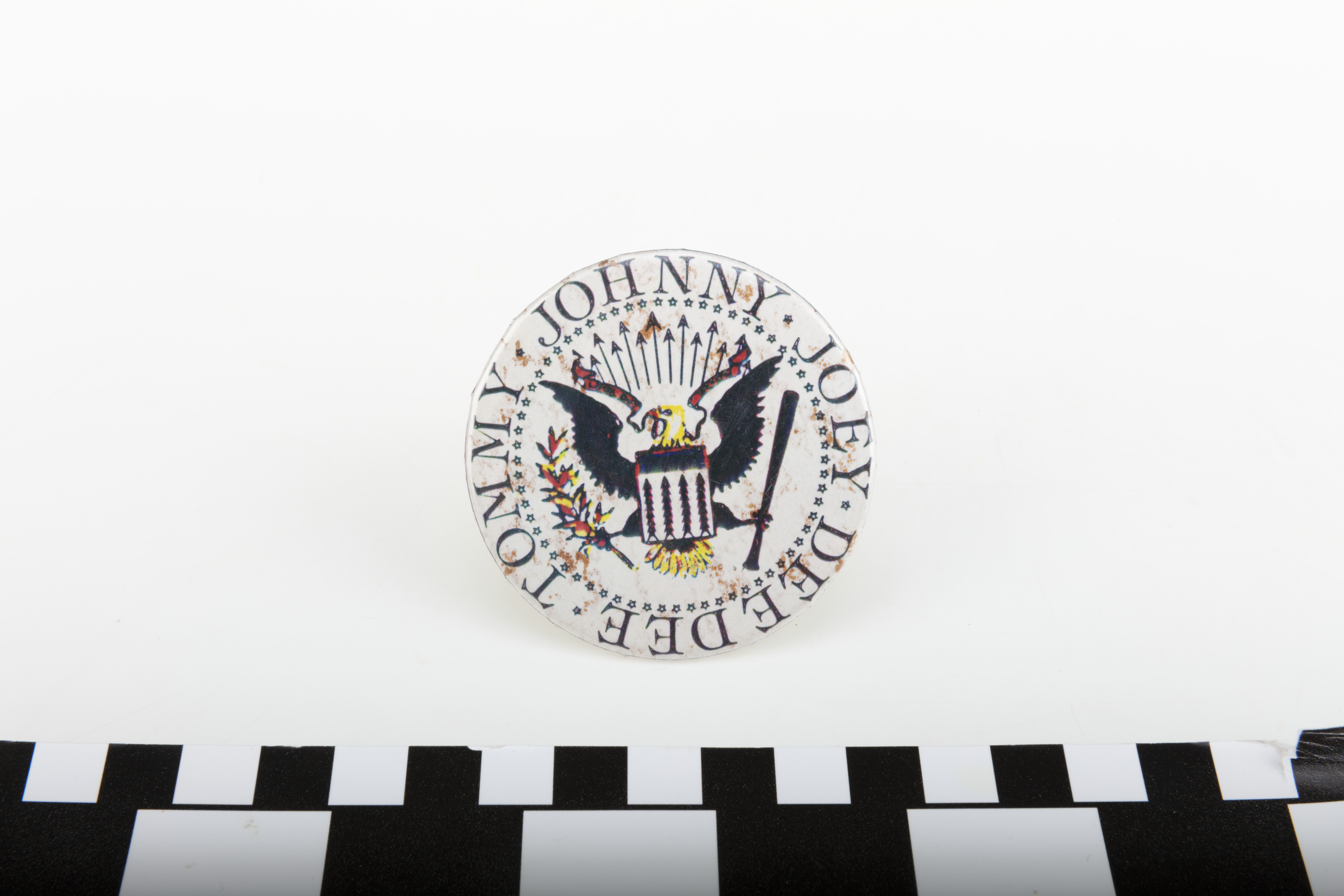
Foto: Badge-A-Minit — Public domain, via Wikimedia Commons
Cheetah Chrome, the Dead Boys, and the Word Joey Ramone Put In at CBGB in 1976
Cheetah Chrome died on September 13 at 71. The obituary is short. The better story is a basement room on the Bowery, and the favor from a friend that got a band from Cleveland onto its stage fifty years ago this fall.
What the band said, and what they did not
The news came from the Dead Boys’ own Instagram account on Sunday, September 13. Cheetah Chrome, born Eugene Richard O’Connor, guitarist and co-founder of the band, was dead at 71. No cause was given, and I am not going to guess at one. The statement called him “a true original, an architect of the punk rock movement,” as Consequence reported.
“Architect” is the right word, and it is worth taking literally. Architects draw the room. Chrome did not draw the room he became famous in. Somebody else had built it, and somebody else got him in the door. That is the part I want to spend the piece on, because it explains how a whole scene grew out of one club.
Cleveland first
Before there were Dead Boys there was Rocket From the Tombs, a Cleveland band that gets the label proto-punk attached to it in every write-up you will ever read. Cheetah Chrome played guitar there. So did drummer Johnny Madansky, who became Johnny Blitz. When Rocket From the Tombs came apart, Chrome and Blitz and singer Stiv Bators built the Dead Boys out of the wreckage, per Consequence.
Hold onto that split. In Cleveland in the mid-seventies this breakup was a seed, and the Dead Boys were only one of the things that grew from it. More on that at the bottom.
The favor, in Hilly Kristal’s own words
Hilly Kristal, who owned CBGB, wrote a history of the club that still sits on the club’s website, and it beats any retelling. In the section on fall 1976 he describes “a special group from Cleaveland” (his spelling) “that Joey Ramone told me about.” He remembers them as “loud, raw, crass, with super high energy.” He also notes one detail about how unfinished they still were: when they first turned up, they had no bass player. Source: cbgb.com, History by Hilly.
The Dead Boys got onto that stage on a Ramone’s word. Joey Ramone had heard about a Cleveland band, vouched for it, and told the owner. The owner gave them a tryout. The band moved to New York in 1976 on the strength of it, and Kristal went a step further than booking them: for a stretch he was their manager, as NPR recounted in its piece on Kristal after his death.
A club owner managing one of his own acts is a conflict of interest in any other industry. In that room in 1976 it was just how things got done. The Ramones were already the house name. Joey used that standing to bring in a band from six hundred miles away that sounded like a fight in a garage. The obituaries leave that connection out: the Dead Boys’ New York career starts with a recommendation, the recommender was a singer, and the person he recommended them to then ran their business.
The room was already there
Tribute pieces tend to blur one thing. CBGB did not appear for the Dead Boys. Kristal had built it and was running it before they arrived; he died in 2007 at 75, and the TODAY obituary covers the arc of the place he founded. By the fall of 1976 the stage already had its regulars, and you know the roll call people recite about that stage. I am skipping it, because the interesting thing about the Dead Boys is that they were the outsiders on it. They were the band that was added, on a word from a friend, to a scene that had already formed.
That is what a scene is: a room, a person running the room who says yes more than no, and a few musicians who will spend their own credit vouching for someone from out of town. Take away Joey’s phone call and the Dead Boys are a Cleveland story. With it, they are a Bowery story, and the room gets louder.
Two records and a split
The Dead Boys got two albums out of the New York years: Young, Loud and Snotty in 1977 and We Have Come for Your Children in 1978, per Consequence. The first title is as accurate a description of the band as Hilly’s “loud, raw, crass.” They turn up in the 1980 documentary D.O.A.: A Right of Passage, and 1980 is also the year they broke up.
Then the pattern every punk band of that generation followed: reunions in 1987, in 2004, and an ongoing run from 2017 onward. Fifty years is long enough for a band to end three times and still be, at the moment of the guitarist’s death, technically active.
What Chrome did with the rest of it
The post-Dead Boys career, as Consequence lays it out: solo records, session work, a tour with GG Allin. In 2010 he published a memoir, Cheetah Chrome: A Dead Boy’s Tale from the Front Lines of Punk Rock. And in 2013 he became a character in someone else’s telling of the room: in the film CBGB, Cheetah Chrome is played by Rupert Grint, per IMDb.
So the Cleveland kid who got in on a recommendation ended up being portrayed by a movie star in a film named after the club. The favor Joey Ramone did in 1976 got a casting credit thirty-seven years later.
The thread to pull next
Go back to Cleveland. Rocket From the Tombs broke up and the Dead Boys were one of the pieces. I want to trace the other pieces, because a band that produces two guitarists’ worth of history from one breakup is a band worth mapping. And there is a second thread I have not pinned down yet: a Dead Boys song that later got picked up by a much bigger band on a covers record. I am not naming it until I have checked the credit.
If you know which other Cleveland band came out of the Rocket From the Tombs split, or which covers album I am thinking of, tell me at @realrocklab on Threads or X. That is the next piece, and I would rather build it with the people who were listening.
Sources: Consequence, cbgb.com, History by Hilly, NPR, TODAY, IMDb.
In this web: Dead Boys · Rocket From the Tombs · Ramones · Cheetah Chrome · Stiv Bators · Hilly Kristal · Joey Ramone