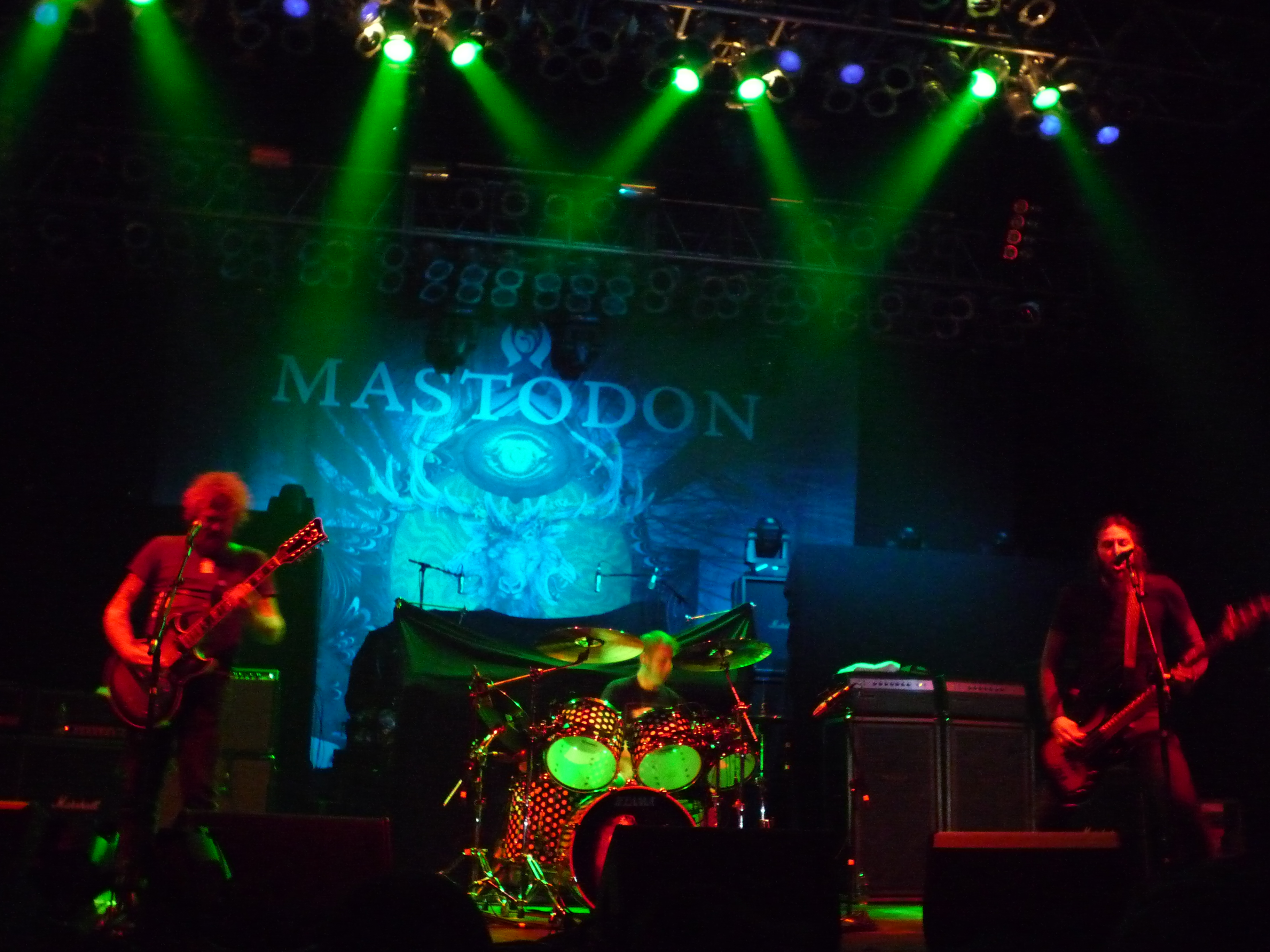
Foto: Christoph Maier — CC BY-SA 3.0, via Wikimedia Commons
Brent Hinds' Final Recorded Solos: Why They're on a Marcus King Record, Not Mastodon's *Marrow Deep*
Mastodon’s grief album has none of the man it grieves. One of the last solos Brent Hinds ever cut sat uncredited on a blues record for six months. The two stories belong together.
Two records, one absence
Mastodon put out Marrow Deep on 28 August 2026. Twelve tracks, 65 minutes, released through Loma Vista, and the first Mastodon album since Remission without Brent Hinds on it. Hinds left the band in March 2025, in a split first described as mutual and later disputed by Hinds himself, who said he had been kicked out for “embarrassing them” (Wikipedia). He died on 20 August 2025 in a motorcycle crash in Atlanta. He was 51.
The band went into West End Sound in Atlanta the next month. Paste puts it plainly: “The band started recording them in September, a month after Hinds died” (Paste). Nick Johnston took the guitar chair Hinds had held for a quarter century, alongside Bill Kelliher. Hinds does not play a single note on the record (Wikipedia).
Back in May, three months before the album, Guitar.com and Lambgoat ran the other half of the story. A song called “Red Door” by Marcus King carries a Hinds solo. It had already been out since Record Store Day’s Black Friday in November 2025, on King’s No Room For Blue, with no credit to Hinds attached. The credit surfaced on 21 May 2026, six months late, via an Instagram post from Banker Handcrafted Guitars, the company that built Hinds’ instruments (Guitar.com, Lambgoat).
Put the two side by side and the shape is odd. The band that spent a year making a record about losing him has none of him on tape. A blues guitarist from South Carolina has 278 takes. Now that both records are out, that connection is worth pulling.
What Marrow Deep actually is
Filing Marrow Deep as “the Brent album” is half right. Brann Dailor lost his mother in the same stretch, and the record carries both deaths. Paste says it is impossible to hear the album “without thoughts of Hinds as well as drummer Brann Dailor’s late mother” (Paste).
The first single, “Your Ghost Again”, arrived on 2 June 2026, and Dailor was direct about it: “my portion of the song is all about Brent, and for Brent” (Wikipedia). “Snakes for Dinner” followed on 13 July with Josh Homme, then “In the Ruins” on 13 August.
What you hear is a different Mastodon. The Wikipedia entry notes the album drops the psychedelic, prog and punk elements Hinds brought to the band (Wikipedia). Which makes sense, since those were his. You cannot keep a man’s fingerprints on a record he is not playing on, and the band did not try to fake them.
Macon, a couch, and 278 takes
The other record starts on the road. After the Mastodon split, King took Hinds out with the Marcus King Band, and it did not hold. King later said he “had to kick him off the tour” because Hinds “forced my hand” (GuitarPlayer). King, who has been open about his own history with substances, framed it as a painful call about someone he considered a hero.
The studio story is warmer. While the Marcus King Band was recording Darlin’ Blue at Capricorn Studios in Macon, Georgia, Hinds “slept on the living room couch for a week (or two, whose counting)” at the house the band rented (Lambgoat). Capricorn is the room where the Allman Brothers Band made records in the seventies, and Hinds, who grew up in Alabama, was about as far from Mastodon’s Atlanta as a man could get while staying in the same state’s neighbour.
The number comes from the Banker post: “he managed to do 278 takes before landing on the one he liked best” (Guitar.com). Two hundred and seventy-eight passes at one solo, on someone else’s song, on a record that would not even carry his name for half a year.
Every outlet that covered it, Guitar.com, Lambgoat, Metal Injection, Chaoszine, uses the same phrase: “one of the last” guitar solos Hinds recorded (Metal Injection, Chaoszine). Nobody has called it the last. There may be more tape out there. But as of today, “Red Door” is the latest recorded Hinds you can buy.
Where a last note actually lands
Side by side, the two records contradict the way biography usually works, which wants a musician’s story to end where the band’s story ends. It almost never does.
Hinds gave Mastodon 25 years. The record his bandmates made to process losing him is the one record he could not touch. Meanwhile his playing sits on a blues album made by a friend, in a studio built for a different genre, credited late and by a guitar builder rather than a label. One is one of his last notes. The other is a note about him.
Neither is more true than the other. Marrow Deep is what a band sounds like after a hole opens in it. “Red Door” is what the missing piece sounded like a few months before it went missing, still stubborn enough to do 278 takes. If you want to hear Hinds in 2025, you have to leave his own band’s catalogue to do it.
The “grief album” coverage skips this part. A recorded legacy follows whoever had a tape running when the musician was in the room, whatever the band’s org chart says.
The thread to pull next
Hinds is not the first player whose late work ended up on a friend’s record instead of his own band’s. Rock history has a long line of session drop-ins, guest solos and couch-surfing sessions that turned out to be someone’s last tape, and the credits often arrived late, if at all. We have not mapped that line yet, and it is the obvious next experiment for this lab.
One record to start with: if you know a guest appearance that turned out to be a musician’s final recording, one where the credit came after the fact, tell us the song and the year at @realrocklab on Threads or X. Which one comes to mind first?
In this web: Mastodon · Brent Hinds · Marcus King